
Common PCOS symptoms include irregular or absent periods, excess facial or body hair, acne or oily skin, and thinning scalp hair. Some people have difficulty becoming pregnant. Symptoms vary, and no single symptom confirms PCOS. Doctors assess the pattern, consider other causes and decide whether tests are needed.
You may also see the name polyendocrine metabolic ovarian syndrome, or PMOS. This became the condition’s new name in 2026. This article uses PCOS because it remains familiar to many readers. The condition and the PMOS app mentioned later are separate things.
Common PCOS symptoms to discuss with a doctor
The table below shows examples of changes to discuss and useful details to bring. These changes can have other explanations; the table is not a diagnostic score.
| Possible change | Useful detail to record |
| Irregular or absent periods | Recent start dates and approximate gaps |
| Acne or oily skin | When it changed and treatments already tried |
| New facial or body hair | Location and how quickly it developed |
| Thinning scalp hair | Approximate onset and any other changes |
| Difficulty conceiving | Your pregnancy goals and relevant history |
Record how each change affects you rather than trying to grade whether it looks severe enough. For acne, note when it began and treatments already tried. For hair changes, note where you noticed them and whether the change developed gradually. These details describe your experience without turning it into a self-diagnosis.
Skin changes are worth mentioning alongside period and hair changes.
Rather than comparing yourself with an online photograph, write down what is new or bothersome for you. “My periods used to arrive regularly and now there are long gaps” is useful information. So is “I have noticed new chin hair over the past year.” You do not need to prove that your experience matches somebody else’s.
Skin and hair changes can have other explanations. Avoid treating acne, a hair change or an app’s cycle estimate as proof of a hormonal condition. A clinician can help decide which details are relevant to your assessment.
How is PCOS diagnosed in adults
The combination of features matters
After excluding other causes, adult diagnosis generally requires two of three features: ovulatory dysfunction, clinical or blood test evidence of androgen excess, and polycystic ovarian appearance. In adults, an appropriately interpreted anti Müllerian hormone test may be used instead of ultrasound to assess the ovarian feature. AMH is not a stand alone diagnostic test. [2]
Why ultrasound is not always needed
Where irregular cycles and androgen excess are already established, ultrasound or AMH may not be necessary. Having ovarian cysts is not a requirement for a PCOS diagnosis. A scan result therefore needs clinical context rather than interpretation from a search result or social media post. [1,2]
Assessment in teenagers is different
The assessment is different for adolescents. Both ovulatory dysfunction and androgen excess are required, and ultrasound and AMH are not recommended for diagnosis at that life stage. A clinician should interpret menstrual changes in relation to the time since periods began. [2]
Tests are selected and interpreted in the context of a clinical assessment.
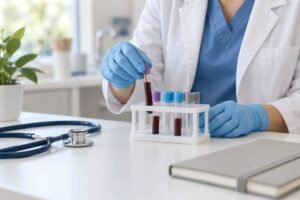
What PCOS blood tests can and cannot show
Blood tests may help assess androgen levels or investigate another explanation for symptoms. The tests you need depend on your history and existing findings. Ask what each test is checking and how its result will affect the next step. AMH must not be interpreted as a stand alone PCOS diagnosis. [1,2]
A useful question is “Which diagnostic features have been established, and which are still uncertain?” This helps you understand why one person is offered a scan while another is not. Bring copies of previous results if available and ask who will explain any new results.
What to bring to a PCOS appointment
You can prepare a one page summary instead of trying to tell your whole history from memory. Put the concern that matters most to you at the top, then add supporting details.
- The dates of recent periods, or an approximate timeline if you do not know them exactly.
- Skin, hair or other changes you have noticed, including roughly when they began.
- Current medicines, hormonal contraception and supplements.
- Relevant previous test results and any known family history of PCOS or type 2 diabetes.
- Your main priorities, such as understanding missed periods, managing a symptom or discussing pregnancy plans.
If an earlier appointment left you confused, bring the words you were told or a copy of the results. It is reasonable to ask what a result means, which diagnostic features are present, and what remains uncertain. You can also ask for the next steps in writing.
Learn what to record when periods are irregular

What happens after a PCOS diagnosis
Care should reflect your symptoms, reproductive plans and wider health. Treatment can include lifestyle support, medication and fertility care when needed. PCOS has no current cure, but treatment can help manage symptoms and protect health. [1]
Ask what follow up is appropriate and how to get help if your situation changes. For example, you might want to discuss long gaps between periods, troublesome skin changes or a new pregnancy goal. Your priorities can change, and your care conversation can change with them.
Leave with a clear understanding of what is being monitored and why. If you are offered a treatment, ask about its purpose, likely benefits, possible adverse effects and alternatives. Do not stop prescribed treatment or contraception just to make a symptom pattern easier to track.
If you want a starting point for everyday meals, explore our food guide alongside your individual care plan. It offers adaptable meal examples rather than a treatment diet.
Explore PCOS foods and simple meal ideas
Keep your history ready for the next visit
PMOS offers daily symptom logs and a Doctor Visit Summary. You can select a date range and report sections, then share a PDF. These tools can help organize the records you choose to bring. They do not run diagnostic tests or determine whether you meet clinical criteria.
Explore insights and doctor reports
Frequently asked questions about PCOS symptoms
Is acne alone a sign that I have PCOS
Acne can occur with PCOS, but it cannot confirm the condition by itself. Discuss persistent or troublesome acne and any period or hair changes with a healthcare professional. [1,4]
Can you get pregnant if you have PCOS
Yes. Many people with PCOS can become pregnant, although ovulation difficulties can make conception harder for some. Discuss your own pregnancy plans or contraception needs with a clinician. [4]
Can I have PCOS without ovarian cysts
Yes. Cysts are not required for diagnosis. Clinicians assess the relevant combination of features and rule out other causes. [1,2]
Can a symptom tracking app diagnose PCOS
No. Your entries can support the history you discuss, but diagnosis requires a clinical assessment. A prediction or pattern on a screen cannot replace that process.
For general information. A qualified healthcare professional can advise on your symptoms and care.
Sources
[1] WHO — Polycystic ovary syndrome
[2] Teede and colleagues — International evidence based guideline recommendations 2023