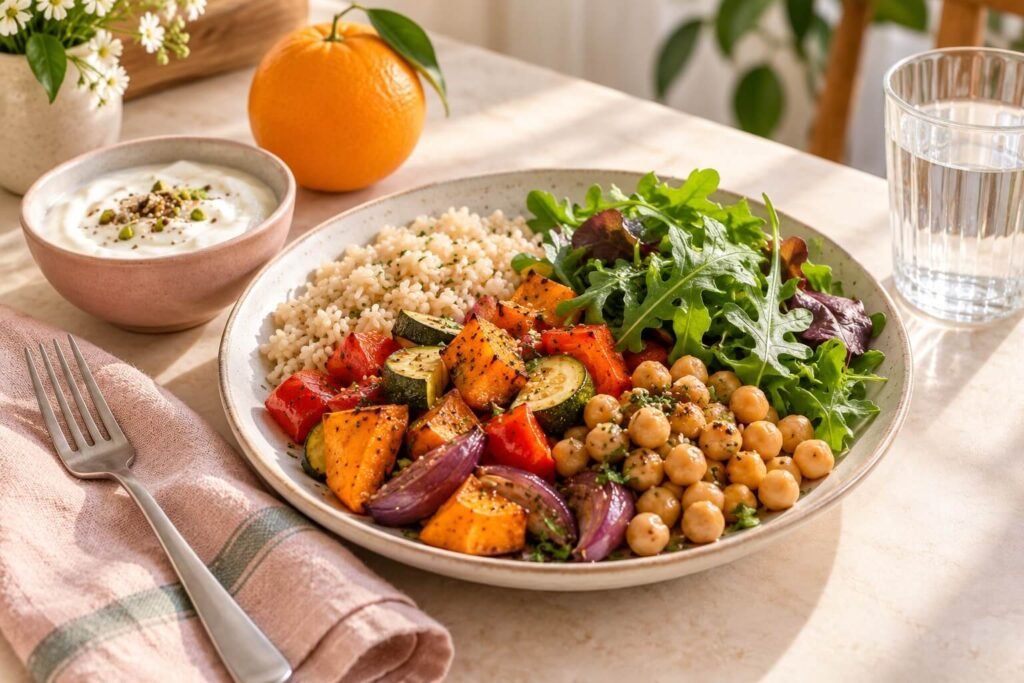
A practical PCOS diet can include vegetables, fruit, beans, wholegrains, eggs, fish, other protein foods, and dairy or suitable alternatives. There is no single eating pattern proven best for everyone with PCOS. Start with balanced meals you can adapt to your budget, preferences and medical needs. [1,2]
The international PCOS guideline does not identify one diet composition as better than all others for the condition’s main outcomes. It supports a sustainable approach that reflects personal preferences and circumstances. Healthy lifestyle changes can offer benefits even without weight loss. [1]
What should you eat if you have PCOS
Before changing everything, look at a normal week. Which meals are easy? Which are often missed or left to a last minute decision? How much time, money and kitchen space do you have? An eating plan needs to work within those limits.
Choose one practical change. You could keep frozen vegetables ready for dinner, add a convenient protein food to lunch, or plan two breakfasts that require little preparation. These are organizing ideas, not a treatment prescription or a promise that a particular food will regulate your periods.
Foods to include in a balanced PCOS diet
General healthy eating guidance includes vegetables and fruit, starchy foods such as rice or potatoes, protein foods such as beans, fish or eggs, and dairy or suitable alternatives. Higher fibre options can be part of that pattern. Balance matters across your overall intake; every plate does not need to be identical.
| Food group | Examples to adapt |
| Vegetables and fruit | Carrots, greens, tomatoes, apples, frozen mixed vegetables |
| Starchy foods | Oats, rice, potatoes, wholegrain bread or pasta |
| Protein foods | Lentils, chickpeas, eggs, tofu, fish or chicken |
| Dairy or alternatives | Plain yogurt, milk or suitable fortified alternatives |
| Unsaturated fats | Olive oil, nuts or seeds when suitable |
Use these food groups to build variety across the day. If a suggested ingredient is unsuitable or unavailable, choose another food from the same broad group. You can use familiar dishes instead of trying to follow a completely different cuisine.
For a quick lunch, try rice with chickpeas and vegetables. Another option is an egg or tofu sandwich with fruit. Dinner could be fish, beans or chicken with potatoes and a vegetable side. Adapt the ingredients to your culture, preferences, allergies and budget.
A convenient meal still counts as a meal. Canned beans, frozen vegetables and leftover rice can be useful kitchen ingredients. You do not need an elaborate recipe, a special powder or an expensive food marketed specifically for PCOS to put several food groups together.
PCOS breakfast ideas for busy mornings
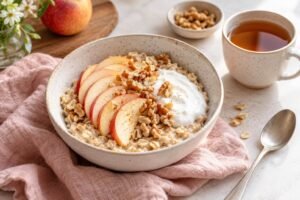
Try oats with fruit and yogurt or an appropriate fortified alternative. Another option is eggs or tofu with wholegrain toast and tomatoes. If mornings are rushed, prepare the ingredients the evening before or choose a breakfast that needs little cooking.
The pictured oats, apple, yogurt and walnuts are one meal example. Choose a nut free topping if you have a nut allergy, and adapt dairy ingredients when needed. These suggestions are meal combinations rather than fixed portions or a promise to change hormone levels.
A breakfast idea that combines several food groups and can be adapted to your needs.
Do you need to avoid carbohydrates with PCOS
The Eatwell Guide includes bread, rice, pasta and other starchy foods within balanced eating. Wholegrain or higher fibre versions are options when they suit you. A PCOS diagnosis does not automatically make a carbohydrate free diet necessary. [1,2]
Try thinking in terms of additions. If your usual lunch is plain toast, you might add eggs or beans and a vegetable side. If dinner is noodles, you could add tofu and vegetables. The aim of these examples is to make meals more varied and practical, not to assign moral labels to foods.
If you have diabetes, another medical condition or a specific dietary requirement, ask for advice tailored to that situation. A general blog article cannot set your carbohydrate needs, medication adjustments or individual nutrition targets.
Are there foods everyone with PCOS should avoid
The guideline supports an eating pattern that can be sustained, rather than a universal list of foods to remove. A PCOS diagnosis alone does not establish an allergy or intolerance. Discuss a specific reason for exclusion with a qualified professional before removing a whole food group. [1]
If social media advice keeps making your list of safe foods smaller, pause and ask for individual support. Your preferences, access to food and any other health conditions matter when deciding what is workable.
Simple PCOS meal ideas for three days
Use this menu as a set of interchangeable ideas. It is not a calorie controlled diet, a complete nutrition prescription or a treatment plan. Adjust ingredients, quantities and snacks to your needs; a dietitian can help with individual targets.
| Day | Breakfast | Lunch | Dinner |
| 1 | Oats with apple, yogurt and walnuts | Chickpeas, rice and vegetables | Fish or tofu with potatoes and greens |
| 2 | Eggs or tofu with toast and tomatoes | Lentil soup with bread and fruit | Chicken or beans with rice and vegetables |
| 3 | Yogurt or suitable alternative with oats and fruit | Egg or chickpea sandwich with a vegetable side | Bean or tofu noodles with mixed vegetables |
A plan that feels impossible during a busy week is difficult to maintain. Keep a few fallback meals in mind for evenings when you are tired, travelling or short of groceries. Repeating a simple meal can be more useful than collecting recipes you never have time to cook.
Try a short shopping list built around meals you already like. For example: oats, eggs or tofu, lentils or chickpeas, rice, a few vegetables, fruit and yogurt or a suitable alternative. This is an illustration, not a complete shopping prescription. Choose substitutes that meet your own needs.
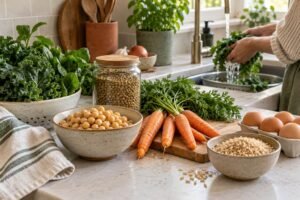
Build a short shopping list around ingredients you can use in more than one meal.
Build a simple shopping list for PCOS meal prep
Choose two or three meals before shopping and look for ingredients that can overlap. Chickpeas might go into a rice bowl one day and a sandwich filling another day. Frozen vegetables can become a side dish or part of a quick stir fry.
- Choose a base you enjoy, such as rice, oats, bread or potatoes.
- Add protein options such as lentils, chickpeas, eggs, tofu, fish or chicken.
- Include vegetables and fruit that fit your budget, including frozen options.
- Choose dairy or suitable fortified alternatives, and a few flavorings you already use.
Write down the meals beside the ingredients so you know what each purchase is for. Check your cupboards first, then keep a fallback option for a day when cooking plans change.
Notice practical obstacles without blaming yourself
If a change does not work, ask what made it difficult. Was breakfast too time consuming? Did you buy ingredients that spoiled before you used them? Would a simpler recipe or a different shopping day help? Those questions lead to an adjustment you can test.
You can keep notes about recipes you enjoyed, ingredients you already have and meals that fit your schedule. Avoid using a single day’s symptoms to decide that one ingredient caused a hormonal change. If eating becomes distressing or restrictions keep expanding, seek support from a qualified clinician or registered dietitian.
When to ask for individual nutrition advice
A registered dietitian can help adapt eating advice to medical conditions, allergies, food access or a difficult relationship with food. The BDA recommends appropriate professional support for personal dietary advice. A generic meal list cannot replace that assessment. [3]
Understand PCOS symptoms and how diagnosis works
Find recipe ideas that use ingredients you have
PMOS includes recipes with adjustable servings and ingredient swaps, plus an AI recipe assistant that starts with ingredients you have. Review suggested ingredients and preparation steps before cooking, especially if you have allergies or specific dietary needs. Food scan nutrition is approximate and should not be used to make medication decisions.
Explore recipes and food features
Frequently asked questions about the PCOS diet
Can a PCOS diet cure the condition
No food or meal plan in this guide is a cure. Eating habits can support health, while assessment and treatment are individualized. Keep following the care plan you agree with your healthcare professional.
What if irregular periods are my main concern
Diet changes do not establish why a period is late. Track the change, consider pregnancy when relevant and seek advice about persistent changes or concerning symptoms.
Read about irregular periods and when to see a doctor
Is there one best PCOS diet
Current international guidance does not establish one diet composition as superior for everyone with PCOS. Choose an approach you can maintain, with professional help when needed. [1]
Do I need to stop eating rice or bread
Not automatically. These foods can fit within balanced eating. Individual advice may differ when you have another condition or a specific treatment plan. [1,2]
For general information. A qualified healthcare professional can advise on your symptoms and care.
Sources
[1] Teede and colleagues — International evidence based guideline recommendations 2023